
Indonesia Water Security: PJT I Optimizes Resources for 2045
State-owned enterprise Perum Jasa Tirta I (PJT I) enhances water resource management to support national food security and Indonesia's Golden 2045 vision.
 Portal Islam



This article was first published in Indonesian. Baca versi Bahasa Indonesia →
Perum Jasa Tirta (PJT) I, Indonesia's state-owned water management enterprise, is optimizing water resource management from upstream to downstream in a sustainable effort to bolster national water security. This strategic initiative serves as a foundational pillar supporting national development toward the "Golden Indonesia 2045" vision, as reported by state news agency ANTARA and Republika on Tuesday (Nov 24, 2026).
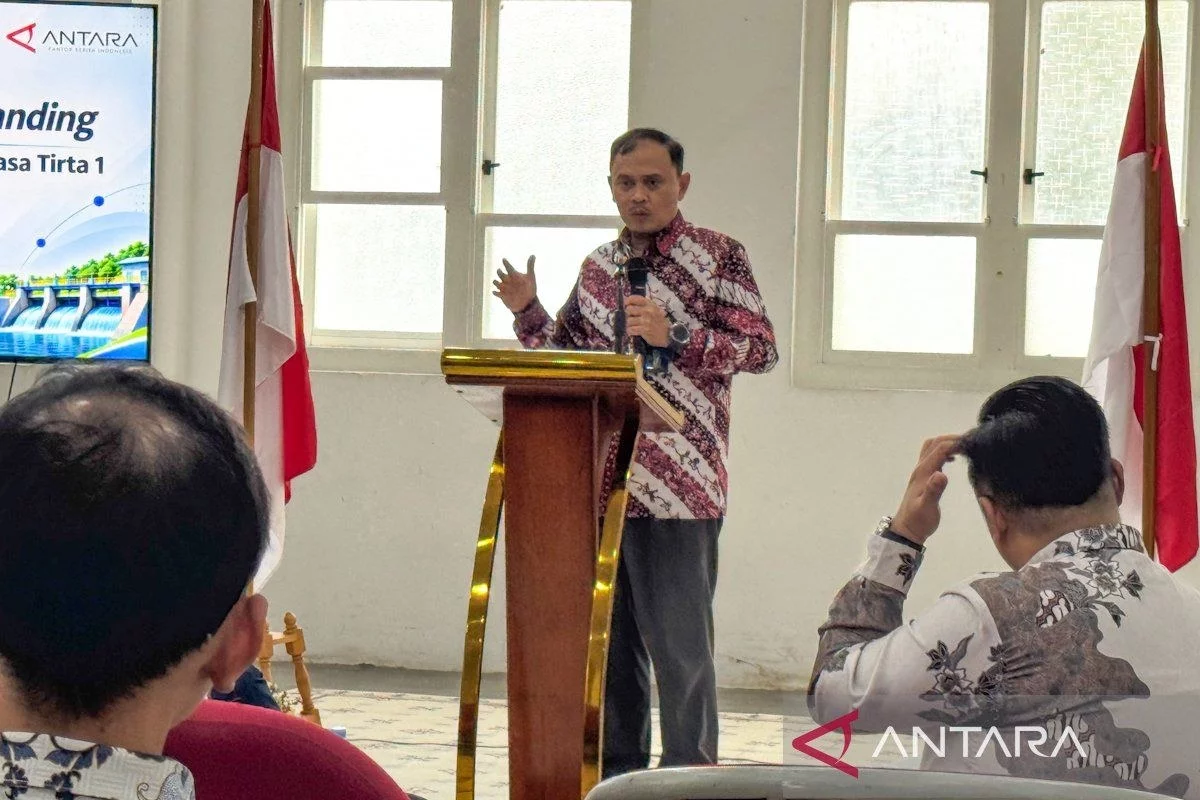
President Director of PJT I, Fahmi Hidayat, explained that the Indonesian government has established medium- and long-term development targets that demand strong water-carrying capacity. Water availability remains a decisive factor in ensuring natural disasters do not derail national growth projections.
However, if water security is not maintained—resulting in floods during the rainy season and droughts during the dry season—and these issues remain unaddressed, achieving the Golden Indonesia 2045 target will certainly be out of reach.
Fahmi Hidayat, President Director of PJT I
Fahmi delivered these remarks in Jakarta on Monday. According to ANTARA, the government has mapped out development goals through the National Medium-Term Development Plan (RPJMN) and the National Long-Term Development Plan (RPJPN) through 2045, aiming to position Indonesia among the world's top five economies. PJT I executes its mandate for water resource management and utilization under Government Regulation No. 46 of 2010.
Proactive Steps Against Drought and Rainy Seasons
As reported by Republika, PJT I emphasized that water is a vital necessity determining the sustainability of strategic sectors—ranging from agriculture, energy, and industry to irrigation and daily household consumption across Indonesia's regions. Integrated upstream-to-downstream management is necessary to maintain an adequate and stable water supply.
To tackle drought threats caused by prolonged dry spells and El Niño weather anomalies, PJT I has implemented tactical measures through cloud seeding operations. Weather modification efforts have focused on the upstream catchments of major rivers, including Toba, Brantas, and Bengawan Solo, to replenish water reserves during dry periods.
Meanwhile, ahead of the rainy season, PJT I is strengthening the readiness of all water infrastructure. Reservoir functionality is optimized to control flooding while maintaining storage capacity for agricultural irrigation, industrial demand, and renewable energy needs. PJT I has also prepared flood alert guidelines to ensure seamless technical coordination on the ground.
Water Self-Sufficiency within the National Asta Cita Framework
PJT I's optimization drive aligns with central government directives highlighting the importance of water sovereignty. Coordinating Minister for Infrastructure and Regional Development Agus Harimurti Yudhoyono (AHY) previously stressed that water self-sufficiency is a major pillar of national development.
Without water, it is difficult for us to achieve food self-sufficiency, because paddy fields must be properly irrigated, especially when facing prolonged dry seasons and the El Niño phenomenon. The same applies to energy security; we want to continue optimizing clean and renewable water-based energy resources.
Agus Harimurti Yudhoyono, Coordinating Minister for Infrastructure and Regional Development
Minister AHY made the statement while chairing the National Water Self-Sufficiency Coordination Meeting at the Coordinating Ministry for Infrastructure in Jakarta on Thursday (Oct 15, 2026). The forum was held as part of the National Water Resources Council, which AHY leads directly. He explained that ensuring adequate water supplies for communities, agriculture, livestock, industry, and energy is a top priority for President Prabowo Subianto under his flagship Asta Cita (eight major development targets) agenda.
This focus on food self-sufficiency echoes efforts to strengthen community-based business networks, such as food supply chain integration promoted through initiatives like ID FOOD Partnering with Muhammadiyah Merchant Network to Strengthen Food Distribution to safeguard household consumption stability.
Islamic Perspective: Stewardship of Water as a Trust of Life
In Islamic teachings, water is one of the greatest divine blessings (*ni'mah*) and the primary source of life for all creation on Earth. Managing water resources in a fair, efficient, and sustainable manner is a sacred duty of stewardship (*khilafah*) aimed at preventing environmental harm and preserving the public interest (*maslahah 'ammah*).
اَوَلَمْ يَرَ الَّذِيْنَ كَفَرُوْٓا اَنَّ السَّمٰوٰتِ وَالْاَرْضَ كَانَتَا رَتْقًا فَفَتَقْنٰهُمَاۗ وَجَعَلْنَا مِنَ الْمَاۤءِ كُلَّ شَيْءٍ حَيٍّۗ اَفَلَا يُؤْمِنُوْنَ ﴿٣٠﴾
Have those who disbelieved not considered that the heavens and the earth were a joined entity, and We separated them and made from water every living thing? Then will they not believe?
Qur'an, Surah Al-Anbiyaa [21]: 30 (Sahih International)
Principles of Islamic jurisprudence (*fiqh muamalah*) affirm that natural resources critical to public welfare—such as water and pasturelands—are collective public assets. These must be managed by the state or state-owned entities in a transparent, equitable manner, free from exploitative practices that harm society.
Muslims share joint ownership in three things: water, pasture, and fire.
Narrated by Abu Dawud
PJT I's commitment to maintaining water facilities and reservoirs provides supply certainty for economic sectors. Reliable access to basic utility infrastructure enhances the national business climate, harmonizing with broader efforts toward financial sustainability and the 2027 Hajj Fund Management Transformation and Strategic Sector Investments in productive public domains.
For businesses, small enterprises (MSMEs), and Muslim families, maintaining water security underscores the spiritual imperative of frugality (*ikhtisad*) and avoiding wastefulness (*tabzir*). Proper reservoir management from upstream to downstream is expected to protect communities from both droughts and floods, keeping economic stability and spiritual tranquility intact for the *ummah*.