
Listyo Sigit's Police Ethics Trial Postponed After He Refuses to Attend
The ethics trial of former Indonesian National Police Chief General Listyo Sigit Prabowo was postponed until November 30, 2026, after he refused to attend.
 Portal Islam



This article was first published in Indonesian. Baca versi Bahasa Indonesia →
The Ethics Commission (KKEP) of the Indonesian National Police (Polri) regarding former National Police Chief General Listyo Sigit Prabowo, originally scheduled for Thursday, November 26, 2026, has been officially postponed. Based on reports from CNN Indonesia, Republika, and ANTARA, the postponement of the ethics panel was due to the subject's absence from the proceedings.
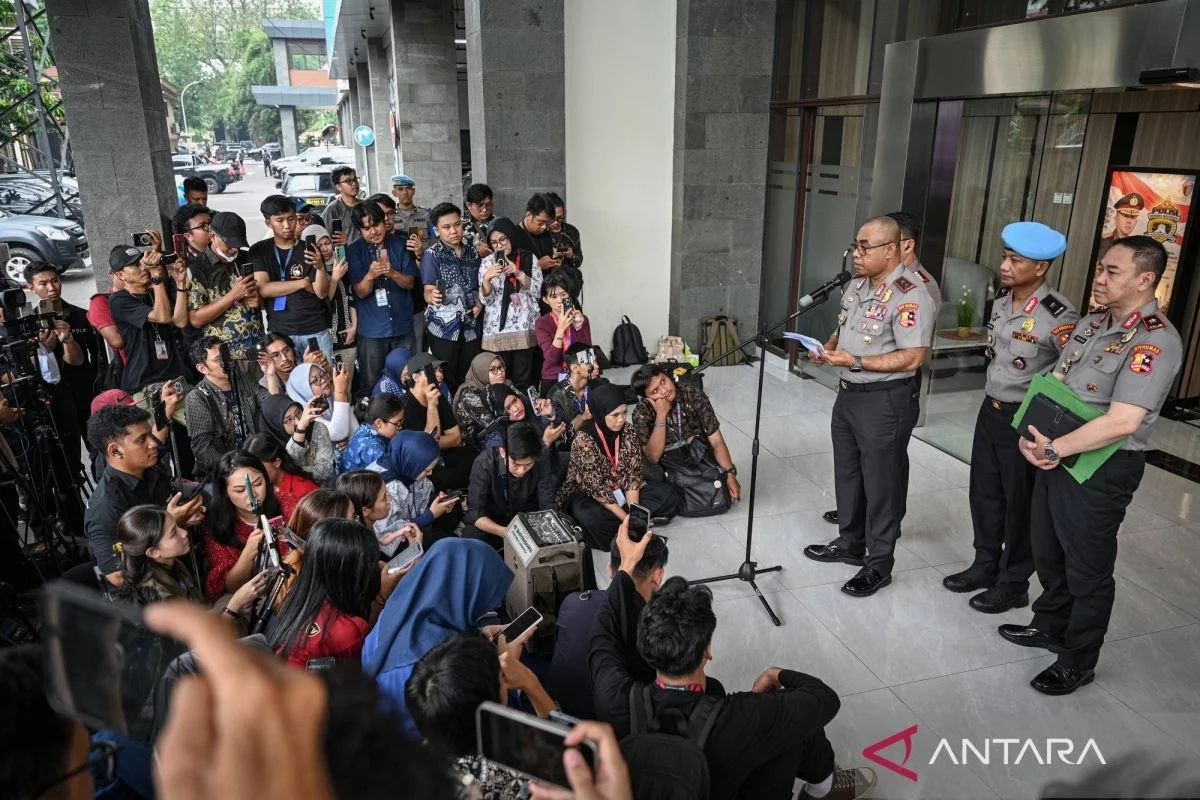
The hearing held at Mabes Polri (the Indonesian National Police Headquarters) on Thursday (Nov 26, 2026) initially opened as scheduled at 09.00 WIB (UTC+7) under the leadership of Commission Chairman Commissioner General Hendro Pandowo. However, after noting the subject's absence, the panel decided to postpone the ethics proceedings until next week. According to CNN Indonesia, the KKEP hearing is rescheduled for Monday, November 30, 2026, at 09.00 WIB (UTC+7) for a second summons.
Reason for Absence and Hearing Regulations
Regarding the reason behind the absence of the former top leader of the Bhayangkara Corps, Head of the Public Relations Division of Mabes Polri Inspector General Johnny Eddizon Isir provided an official explanation. According to CNN Indonesia, the subject's absence was due to his refusal to attend. This refusal was formally documented in a refusal report signed directly by him when met by the prosecution team at the Mako Brimob Detention Center.
Inspector General Johnny Eddizon Isir emphasized that Mabes Polri did not take forced pickup measures against the subject due to internal police regulations that differ from criminal court proceedings.
"We need to convey that the alleged violator LSP, as per today's Ethics Commission hearing schedule, did not attend in accordance with the absence refusal report signed by the alleged violator LSP," said Inspector General Johnny Eddizon Isir in a press conference on Thursday (Nov 26, 2026) as quoted by CNN Indonesia.
He also added regarding the mechanism for fetching the subject under police professional rules:
"As regulated by Police Regulations regarding the Police Professional Code of Ethics and the Professional Code of Ethics Commission, there is no regulation to carry out forced efforts. Unlike in a criminal justice process," said Eddizon Isir.
Legal Consequences and In Absentia Mechanism
The KKEP prosecutors are scheduled to issue a second summons for the hearing on Monday, November 30, 2026. This summons aims to provide the subject with an opportunity to attend the trial and present his defense. However, if the subject again refuses to attend the second summons, the trial will proceed in absentia (without the subject's presence) until the verdict and sanctions are read.
According to CNN Indonesia, absence during the second summons will carry significant legal consequences for the subject. Based on Article 65 letter c of Police Regulation Number 7 of 2022 as amended by Police Regulation Number 4 of 2026, the subject will lose the right to appeal.
"The alleged violator will lose the right to appeal, because the Ethics Commission's decision will be final and binding," stressed Inspector General Johnny Eddizon Isir.
Meanwhile, according to Republika reports, Police Observer from the Institute for Security and Strategic Studies (ISSES) Bambang Rukminto assessed that the subject's absence is his right, although institutional processes must still proceed.
"It could be because he already knew that the KKEP trial was merely a formal procedure, even just ceremonial for LSP, as the sanctions are already clear, namely severe ethical violations with Dishonorable Discharge (PTDH) administrative punishment," Bambang Rukminto told Republika on Thursday (Nov 26, 2026).
Bambang Rukminto added an explanation regarding the article basis for trials conducted in the absence of the alleged violator:
"Skipping the trial is his right. But the KKEP trial also has a mechanism such as Article 59 paragraph (3) that in the event the Alleged Violator does not attend after being summoned legally twice, the KKEP trial is held without the alleged person's presence," explained Bambang as reported by Republika.
Based on the provisions of Article 59 of Police Regulation Number 4 of 2026 referred to by Republika, the KKEP trial held without the presence of the alleged violator after being legally summoned twice remains obligated to hand down a verdict within a maximum of 30 working days.
Context of the Case and Resignation Status
This ethics trial stems from the legal status established for the subject. According to reports from CNN Indonesia and Republika, the former police leader has been named a suspect in two separate criminal cases, namely alleged illegal wiretapping against President Prabowo Subianto and alleged treason. This information aligns with previous reports regarding Mabes Polri naming former National Police Chief Listyo Sigit as a suspect in the illegal wiretapping case which has drawn public attention.
The developments in his case are also closely related to the legal handling of the former National Police Chief being named a suspect in the procedural wiretapping case by the authorities.
On the other hand, quoted from an ANTARA report on Friday (Nov 27, 2026), Polri conveyed another fact regarding the subject's membership status. Polri stated that General LSP is ineligible to resign from the police institution based on the provisions and rules applicable in Police Regulations (Perpol).
Islamic Perspective on Trust and Justice
In the perspective of Islamic teachings, upholding ethics, responsibility, and the rule of law is an essential part of preserving justice and trust (amanah). Every task and obligation carried out by human beings will ultimately be accounted for, both before human law and before Allah.
Allah reminds us of the importance of fulfilling trusts and establishing justice fairly in the Qur'an:
۞ اِنَّ اللّٰهَ يَأْمُرُكُمْ اَنْ تُؤَدُّوا الْاَمٰنٰتِ اِلٰٓى اَهْلِهَاۙ وَاِذَا حَكَمْتُمْ بَيْنَ النَّاسِ اَنْ تَحْكُمُوْا بِالْعَدْلِ ۗ اِنَّ اللّٰهَ نِعِمَّا يَعِظُكُمْ بِهٖ ۗ اِنَّ اللّٰهَ كَانَ سَمِيْعًاۢ بَصِيْرًا ﴿٥٨﴾
Indeed, Allah commands you to render trusts to whom they are due and when you judge between people to judge with justice. Excellent is that which Allah instructs you. Indeed, Allah is ever Hearing and Seeing.
Qur'an, Surah An-Nisaa [4]: 58 (Sahih International)
Through a transparent and fair legal process and code of ethics enforcement, it is hoped that the values of truth, integrity, and accountability can continue to be upheld for the common good and justice for all layers of society.