Is Celebrating New Year Permissible in Islam? Ruling & Views
Discover the Islamic ruling on celebrating the New Year. Learn about scholarly views, traditions, and how Muslims can approach the transition of years.
 Portal Islam



This article was first published in Indonesian. Baca versi Bahasa Indonesia →
Celebrating the New Year has become a tradition in many countries, including among Muslims. However, the question frequently arises: Is celebrating the New Year permissible in Islam? This article examines the legal ruling on New Year celebrations, evidence from the Qur'an and the sunnah, and the views of scholars on this matter.
The Islamic Ruling on Celebrating the New Year
In Islam, all matters must refer to the sharia derived from the Qur'an and the hadiths of the Prophet Muhammad ﷺ. Celebrating the New Year, whether the Gregorian calendar or otherwise, is not part of Islamic teachings and was never practiced by the Prophet or the Companions (Sahabah).
Allah says:
"And whoever desires other than Islam as religion - never will it be accepted from him, and he, in the Hereafter, will be among the losers."
Qur'an, Ali Imran: 85
A hadith of the Prophet also reminds us not to imitate the customs or traditions of other communities that contradict Islamic law:
"Whoever imitates a people is one of them."
Narrated by Abu Dawud
Evidence Regarding Celebrations in Islam
In Islamic teachings, there are only two legislated festivals (Eid), namely:
- Eid al-Fitr – celebrated after the month of Ramadan.
- Eid al-Adha – celebrated on the 10th of Dhu al-Hijjah following the Hajj pilgrimage.
It was narrated from Anas bin Malik (may Allah be pleased with him) that the Prophet said:
"Verily Allah has replaced for you two better days than those: Eid al-Adha and Eid al-Fitr."
Narrated by Ahmad, Abu Dawud, and al-Nasa'i
Therefore, celebrations outside of these two festivals, if not based on the sharia or containing elements contrary to Islam, should not be performed.
Scholarly Views on Celebrating the New Year
1. Imitating the Traditions of Others
Many scholars hold the view that celebrating the New Year falls under tasyabbuh (imitating) the habits of non-Muslims. This is prohibited in Islam based on the hadith mentioned above.
2. Lacking Benefit
New Year celebrations are often marked by activities that conflict with Islamic values, such as:
- Excessive partying.
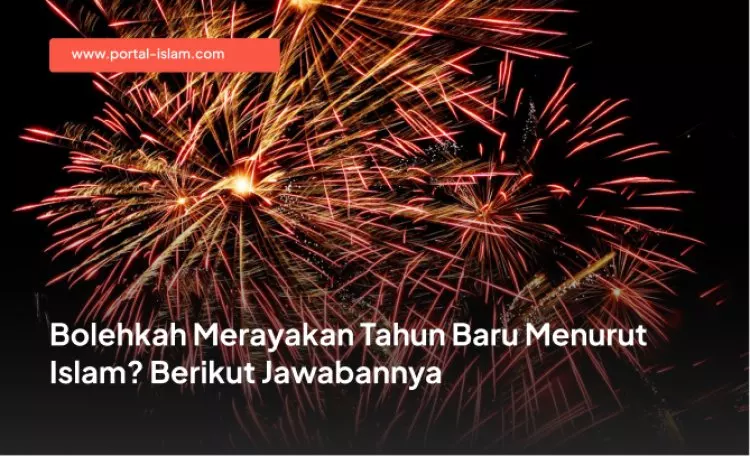
- Burning fireworks, which constitutes wastefulness.
- Free mixing or other sinful actions.
Allah forbids futile and excessive behavior:
"Indeed, the wasteful are brothers of the devils."
Qur'an, Al-Isra: 27
The Prophet also stated:
"An indication of a person's good Islam is his leaving that which does not concern him."
Narrated by al-Tirmidhi
Can the New Year Moment Be Used for Introspection?
Although celebrating the New Year in the form of parties is forbidden, Muslims are certainly permitted to use the turn of the year as a time for self-introspection, as long as it is done in ways that do not violate the sharia.
Examples include:
-
Increasing Faith and Righteous Deeds
Use the time to reflect, evaluate the past year's deeds, and renew intentions to become a better person in the coming year. -
Engaging in Du'a and Dhikr
Instead of partying, it is far better to increase remembrance of Allah (dhikr), read the Qur'an, and offer du'a asking Allah to bless our lives and deeds.
Allah says:
"And whoever fears Allah - He will make for him a way out."
Qur'an, At-Talaq: 2
Conclusion
Celebrating the New Year through parties or by following traditions that contradict Islamic law is not permissible. This falls under imitating the traditions of non-Muslims (tasyabbuh) and frequently leads to futile or sinful actions.
However, Muslims may utilize the transition of the year as a means for self-reflection, improving deeds, and drawing closer to Allah through methods aligned with the sharia.