Muhammadiyah Concludes Tanwir Council, Sets 49th Congress Plans
The Muhammadiyah Tanwir Council in Palu has officially concluded, establishing leadership election schemes for the upcoming 49th Congress in Medan.
 Portal Islam



This article was first published in Indonesian. Baca versi Bahasa Indonesia →
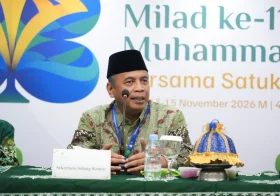
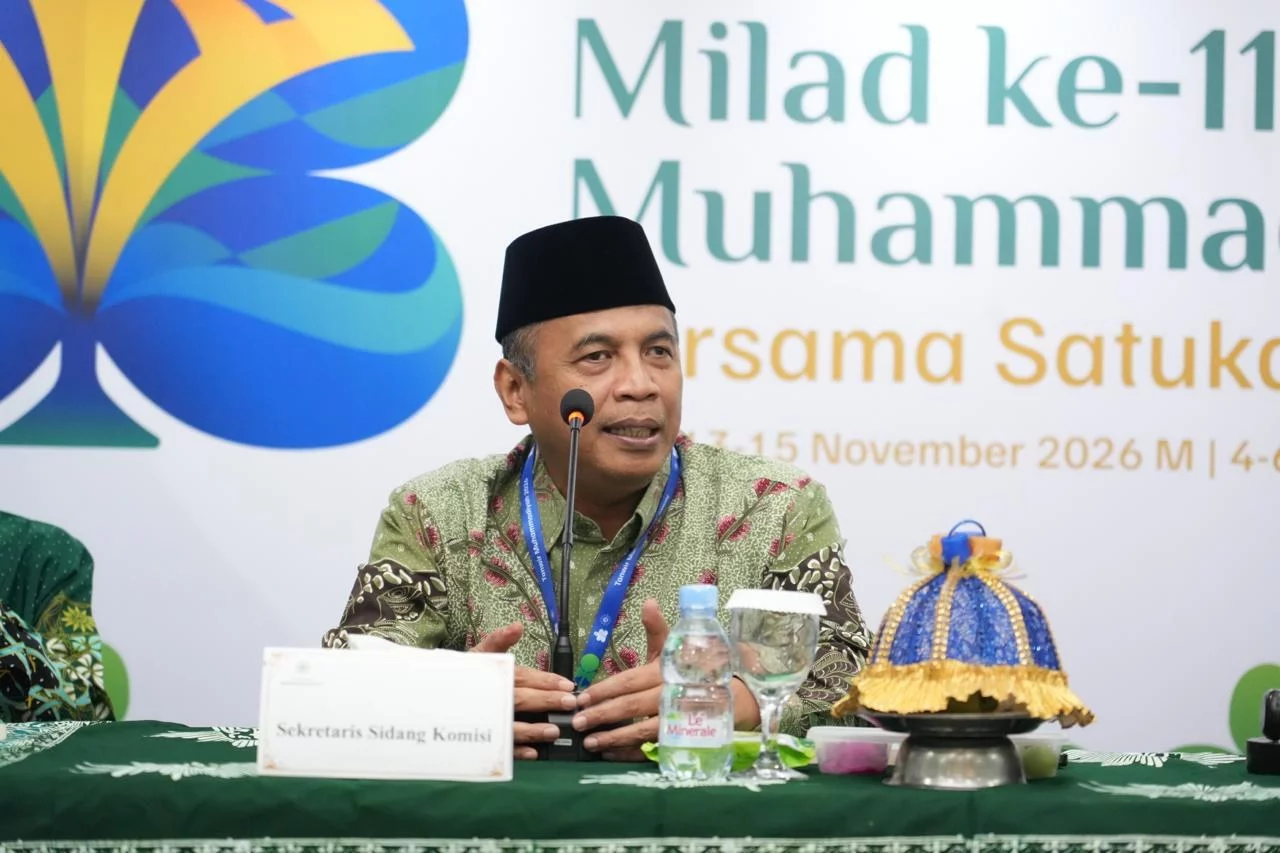
PALU — The Tanwir Council deliberation and 114th anniversary celebrations of Muhammadiyah (one of Indonesia's largest Islamic mass organizations), held in Palu, Central Sulawesi, officially concluded on Sunday (Nov 15, 2026, UTC+7). According to reports from the organization's official media portal muhammadiyah.or.id and the national daily Republika, this top policy-making forum beneath the Congress (Muktamar) produced several strategic decisions to lay the groundwork for the upcoming 49th Muhammadiyah Congress. Key agreements included finalizing the central leadership election bylaws, establishing the election committee, drafting participant regulations, formulating a 20-year long-term program, and discussing the Muhammadiyah Universal Message (Risalah Kesemestaan).
As reported by Republika, the event—hosted at Universitas Muhammadiyah Palu (Muhammadiyah University of Palu) in Palu City—was formally closed on Sunday (Nov 15, 2026, UTC+7) by the General Chairperson of the Muhammadiyah Central Board (PP), Prof. Haedar Nashir, with 220 participants in attendance. Quoting Republika, Prof. Haedar expressed his utmost appreciation to all parties involved in the organizational agenda.
"Thank you to all the Muhammadiyah Central Board committees, and may Allah make it all part of our ongoing charitable deeds (amal jariyah). We close this with alhamdulillah," Haedar stated during the closing ceremony, as reported by Republika.
Discrepancies in Reporting Regarding Schedule and Theme
Reports from the two source media outlets contained slight variations regarding the duration of the event and the exact wording of the theme adopted for the Palu Tanwir Council.
Based on the report by muhammadiyah.or.id, the Muhammadiyah Tanwir took place over two days, from November 13–14, 2026. Meanwhile, according to Republika, the council proceedings spanned four days, beginning on Thursday (Nov 12, 2026, UTC+7) and concluding on Sunday (Nov 15, 2026, UTC+7).
Aside from the duration, minor wording differences appeared in the reported themes. Muhammadiyah.or.id noted the theme "Together Uniting the Nation" ("Bersama Satukan Bangsa"), while Republika cited the theme as "Together Uniting the Nation" ("Bersama Menyatukan Bangsa"). Despite these phrasing differences, both outlets underscored the same underlying national message: strengthening the commitment to national unity amidst diverse dynamics.
Scheme and Mechanism for Electing the Central Board
A primary focus of the Tanwir Council was establishing the Central Board election scheme for the 49th Congress. According to muhammadiyah.or.id and Republika, the leadership election mechanism maintains the framework used in previous periods.
As cited by both outlets, Muhammadiyah Central Board member and Chairperson of the Tanwir and 114th Anniversary Committee, Agung Danarto, explained that the selection process begins with nominations put forward by Tanwir members.
"Praise be to Allah, the Tanwir has concluded smoothly and produced resolutions in preparation for the Congress," Agung stated after the closing session, as quoted by muhammadiyah.or.id and Republika.
Based on Agung Danarto's explanation reported by both media, the screening and election procedure for the central leadership will follow these sequential stages:
- Each Tanwir member nominates 13 candidates for the Muhammadiyah Central Board.
- Individuals captured in this screening phase are contacted by the election committee to participate in a tiered selection process.
- This tiered selection narrows the field down to 13 Central Board members, who are then officially confirmed during the Congress forum.
- The 13 elected Central Board members subsequently deliberate to choose the General Chairperson of the Central Board from among themselves.
"As for the election of the general chairperson, once the Congress produces the 13 board members, these 13 will select the general chairperson from among themselves," Agung explained, as cited in Republika's report.
According to Republika, Agung emphasized that by the time the Tanwir concluded, no official candidate names had surfaced yet because the formal screening process only begins once individual Tanwir members submit their 13 preferred names to the committee.
Appointment of the Election Committee and Congress Delegates
To oversee the democratic process within the organization, the Tanwir forum officially inaugurated the election committee structure. According to muhammadiyah.or.id and Republika, the council appointed Muhammad Sayuti as Chairperson of the Election Committee for the 49th Muhammadiyah Congress, supported by 14 members. This committee bears the full responsibility of organizing all stages of leadership selection.
In addition to the election committee, the Tanwir forum formulated and ratified the bylaws for the 49th Congress, including quotas and regulations regarding the number of delegates from regional and local chapters across Indonesia. According to Republika, the 49th Muhammadiyah Congress is scheduled to take place in Medan, North Sumatra, on November 18, 2027.
The committee's next step involves detailed participant registration on a name-by-name basis. Quoted by muhammadiyah.or.id and Republika, the registration process for eligible attendees is targeted for completion several months prior to the main event.
"It is expected that approximately three months before the Congress takes place, the complete list of registered participants will be finalized," Agung Danarto explained, as cited by muhammadiyah.or.id.
During the Palu Tanwir forum, the official logo for the 49th Muhammadiyah Congress was also unveiled. The logo features the identity of the host city, Medan, alongside the official dates of the event.
Formulating Strategic Documents: 20-Year Program and Universal Message
Beyond establishing organizational rules, the Muhammadiyah Tanwir discussed long-term strategic intellectual directions for the organization. According to muhammadiyah.or.id and Republika, the forum agreed to refine the concept for Muhammadiyah's 20-year long-term program.
The initial concept proposed by the Muhammadiyah Central Board received various inputs and refinements during commission discussions. The results of these discussions will be reformulated for final approval at the 49th Congress.
"Muhammadiyah's long-term program for the next 20 years was also decided upon today. From the concept proposed by the Central Board, several refinements were made, which we will restructure to serve as material for decisions at the upcoming Congress," Agung explained, as quoted by Republika.
Another ideological decision stemming from the Tanwir was the discussion surrounding the draft of the Muhammadiyah Universal Message (Risalah Kesemestaan). According to muhammadiyah.or.id, this document is designed as a normative foundation and ideological guide for Muhammadiyah in expanding civilizational roles at both national and international levels.
According to Agung Danarto's statement in Republika, the document aims to prepare Muhammadiyah to take a more active role in building global civilization in pursuit of the ideal of khaira ummah (the best community, excelling and progressive). While the organization already possesses the national perspective of Darul Ahdi wa Syahadah (State of Covenant and Testimony), the Universal Message serves as a stepping stone for the international arena.
"This leans more toward global issues, preparing Muhammadiyah to have a presence in the global realm. Nationally, we already have Darul Ahdi wa Syahadah. Now, we are preparing for the international stage," Agung elaborated, as cited by Republika.
The draft of the Universal Message, compiled into book form, has passed the initial discussion stage within the Tanwir commission sessions. However, to mature its standing, the forum mandated all regional Muhammadiyah leadership boards across Indonesia to study the message thoroughly before its formal ratification at the 49th Congress.
"All regional boards are mandated to study this Universal Message seriously so that a mature and sound concept is produced," Agung concluded, as quoted by muhammadiyah.or.id.
National Message: Preserving Indonesia's Unity
Aside from discussing internal and international agendas, the Muhammadiyah Tanwir issued a firm stance regarding national conditions. According to muhammadiyah.or.id and Republika, Muhammadiyah remains committed to acting as a unifying glue for the nation amidst various social, political, and economic dynamics.
Agung Danarto underlined the importance of practicing the spirit of Bhinneka Tunggal Ika (Unity in Diversity) while placing primary emphasis on its unifying aspect. He stated that Indonesia's diversity must be bound by a firm commitment to unity.
"Let us not forget to bind and unite the nation so that we remain within unity. Bhinneka Tunggal Ika—we may be different, but remember that efforts to unite the nation are of paramount importance," Agung stated, as reported by Republika.
He added that Muhammadiyah encourages prioritizing national unity above accentuating differences.
"The emphasis should not be on the diversity (bhinneka), but on the oneness (tunggal ika)," Agung concluded, as cited by muhammadiyah.or.id and Republika.
The orderly consultative tradition displayed in this Tanwir forum mirrors various organizational dynamics at branch and regional levels, such as the branch deliberations held by Pemuda Muhammadiyah Biringkanaya and leadership regeneration during the Minasa Upa Pemuda Muhammadiyah Branch Deliberation II. Such values of service are likewise reflected in humanitarian and social activities, such as those carried out at the Muhammadiyah Putra Orphanage in Pare, Kediri.
Islamic Wisdom: The Spirit of Consultation and Khaira Ummah Civilization
The orderly conduct of the Muhammadiyah Tanwir, oriented toward national and international welfare, reflects Islamic leadership principles that prioritize consultation (shura) and the aspiration to build a premier civilization. The ideal of fostering an exemplary community, or khaira ummah, discussed during the Tanwir forum, rests on a solid foundation in the Qur'an.
Allah Almighty speaks regarding the status of the best community:
كُنْتُمْ خَيْرَ اُمَّةٍ اُخْرِجَتْ لِلنَّاسِ تَأْمُرُوْنَ بِالْمَعْرُوْفِ وَتَنْهَوْنَ عَنِ الْمُنْكَرِ وَتُؤْمِنُوْنَ بِاللّٰهِ ۗ وَلَوْ اٰمَنَ اَهْلُ الْكِتٰبِ لَكَانَ خَيْرًا لَّهُمْ ۗ مِنْهُمُ الْمُؤْمِنُوْنَ وَاَكْثَرُهُمُ الْفٰسِقُوْنَ ﴿١١٠﴾
You are the best nation produced [as an example] for mankind. You enjoin what is right and forbid what is wrong and believe in Allah. If only the People of the Scripture had believed, it would have been better for them. Among them are believers, but most of them are defiantly disobedient.
Qur'an, Surah Aal-i-Imraan [3]: 110 (Sahih International)
The Tanwir deliberations—which successfully established transparent election rules and formulated guidelines for the Universal Message—demonstrate how the organization integrates religious values with modern governance. This step serves as an example that striving to preserve national unity and contributing globally constitutes an integral part of seeking the pleasure of Allah Almighty.