
Indonesia Boosts Livestock Feed & Local Basmati Rice Production
Indonesia's Ministry of Agriculture works to build national feed mills and cultivate Basmati rice in Bekasi to support farmers and cut supply chain costs.
 Portal Islam



This article was first published in Indonesian. Baca versi Bahasa Indonesia →
Agriculture Minister Andi Amran Sulaiman is pushing to strengthen Indonesia's national feed industry while expanding the agricultural potential of regional areas. This strategic move aims to secure raw material supplies, shorten supply chains, and protect the economic viability of smallholder livestock farmers and local growers. Announced on Saturday, 28 November 2026, the policy focuses on downstreaming the livestock sector and expanding high-value regional commodities.
This strategic approach positions domestic feed production capacity and local land optimization as key pillars for lowering production costs, guaranteeing supply stability, and maintaining affordable food prices for consumers nationwide.
2 Boosting National Feed Production to Protect Smallholder FarmersAccording to a report by Indonesian news outlet Republika, Agriculture Minister Andi Amran Sulaiman emphasized that the government is bolstering the national feed industry through the construction of feed mills and the active involvement of State-Owned Enterprises (BUMN). This initiative is designed to lower production costs and guarantee raw material availability for small-scale livestock producers.
The government views feed industry development as an integral component of its downstream strategy for the national livestock sector. By creating a more competitive cost structure, the policy aims to support independent farmers operating with limited capital, given that feed constitutes one of the largest expenditure items in poultry farming.
We are strengthening the livestock sector through downstream development, including the construction of feed factories.
Agriculture Minister Andi Amran Sulaiman
Speaking in Jakarta on Saturday, 28 November 2026, Amran revealed that one of the state-backed feed mill projects has reached approximately 40 percent completion. The facility is targeted for direct inauguration by Indonesian President Prabowo Subianto in June 2027. Although specific details regarding its location and production capacity were not disclosed, the facility is considered a strategic instrument to fortify the national poultry production system.
3 Streamlining Raw Material Supply ChainsStrengthening the feed industry aims to provide supply certainty and fair pricing for smallholder farmers.
Agriculture Minister Andi Amran Sulaiman
The participation of State-Owned Enterprises is being encouraged to shorten the supply chain for critical feed ingredients, such as soybean meal, which serves as a vital protein source in poultry feed formulations. Fluctuations in price and supply disruptions for soybean meal heavily impact overall livestock production costs.
Amran emphasized that smallholder farmers require continuous support to maintain the competitiveness of national animal protein production. This support includes:
- Ensuring the availability of day-old chicks (DOC) at fair prices.
- Maintaining a stable and affordable feed supply.
- Providing an adequate supply of livestock vaccines.
Achieving cost efficiency in livestock production directly contributes to keeping chicken meat and eggs affordable for the public, aligning with widespread community focus on national food and nutritional needs.
2 Cultivating Basmati Rice Potential in Bekasi RegencyAccording to national news agency ANTARA, Minister Amran is also targeting Bekasi Regency in West Java as a strategic center for Basmati rice production. This initiative seeks to meet domestic demand, reduce reliance on imports, and unlock export opportunities for premium rice varieties.
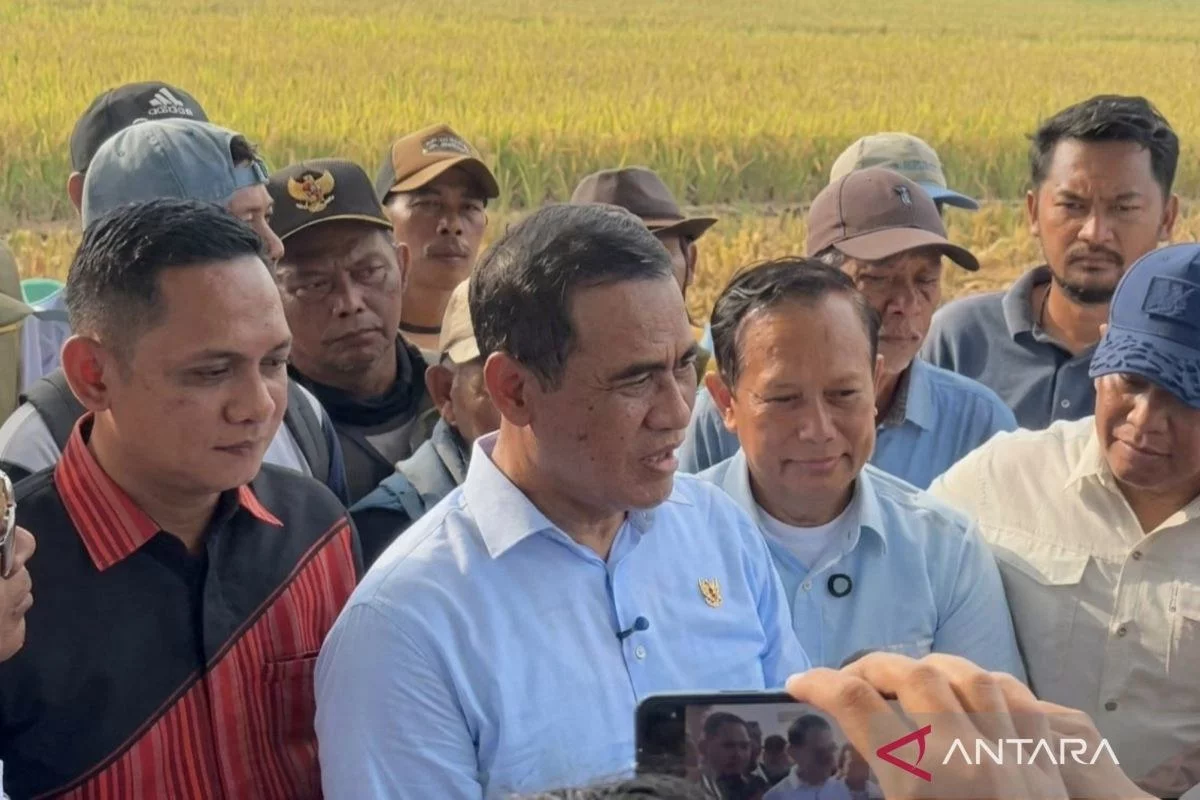
Attending a grand harvest event in Kobak Pasir Hamlet, Karangpatri Village, Pebayuran District, Bekasi Regency on Saturday, 28 November 2026, Amran noted that this long-grain aromatic rice variety is well-suited for local cultivation in line with directions from President Prabowo Subianto.
3 Production Targets and Government SupportThe government is encouraging the production of specialty rice like Basmati to fulfill national market demand, including the premium segment for international tourists.
Agriculture Minister Andi Amran Sulaiman
Because Basmati rice cultivation involves technical challenges that previously necessitated reliance on imports, the success of Bekasi farmers will receive full government backing. This effort underscores the role of international trade in economic growth.
The government has established key targets and support schemes for Basmati rice development:
- National Basmati rice production target of 50,000 metric tons per year.
- Initial national target planting area of 10,000 hectares.
- Land allocation expansion of 3,000 to 4,000 hectares in Bekasi Regency.
- Distribution of agricultural aid, including seeds, fertilizers, one combine harvester unit, farm road construction across four points, and an 8,000-square-meter retention basin (embung).
This development is integrated into the planned 10,000-hectare Agricultural 'Giant Lab' zone in Bekasi Regency, supported by modern irrigation systems and a cropping pattern allowing up to three harvests annually.
2 Islamic Insights: Establishing Fair Trade and Eliminating GhararFrom an Islamic economic perspective, government initiatives to shorten lengthy supply chains and guarantee price stability for smallholder farmers reflect the core principle of justice in trade. Streamlining distribution channels helps protect commercial transactions from excessive uncertainty (gharar) in pricing, which frequently disadvantages vulnerable small-scale producers.
Islam commands that all production and commercial activities be conducted in a halal, equitable, and transparent manner without wronging any party. Allah says in the Qur'an:
يٰٓاَيُّهَا النَّاسُ كُلُوْا مِمَّا فِى الْاَرْضِ حَلٰلًا طَيِّبًا ۖوَّلَا تَتَّبِعُوْا خُطُوٰتِ الشَّيْطٰنِۗ اِنَّهٗ لَكُمْ عَدُوٌّ مُّبِيْنٌ ﴿١٦٨﴾
O mankind, eat from whatever is on earth [that is] lawful and good and do not follow the footsteps of Satan. Indeed, he is to you a clear enemy.
Qur'an, Surah Al-Baqara [2]: 168 (Sahih International)
Efforts to enhance feed production efficiency and strengthen regional staple food production, such as Basmati rice, are more than commercial strategy. They represent a vital effort by Muslim entrepreneurs and policymakers to safeguard food security (hifz an-nafs) and bring shared prosperity to small enterprises and the wider public.
2 Sources