West Sumatra Flood Crisis: 129 Dead, Relief Mobilized
Severe flooding and landslides hit West Sumatra, leaving 129 dead and 118 missing. Indonesian authorities launch emergency relief and recovery plans.
 Portal Islam



This article was first published in Indonesian. Baca versi Bahasa Indonesia →
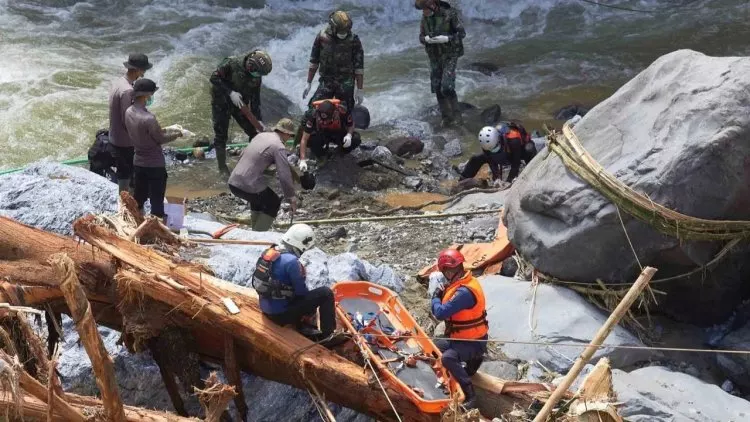
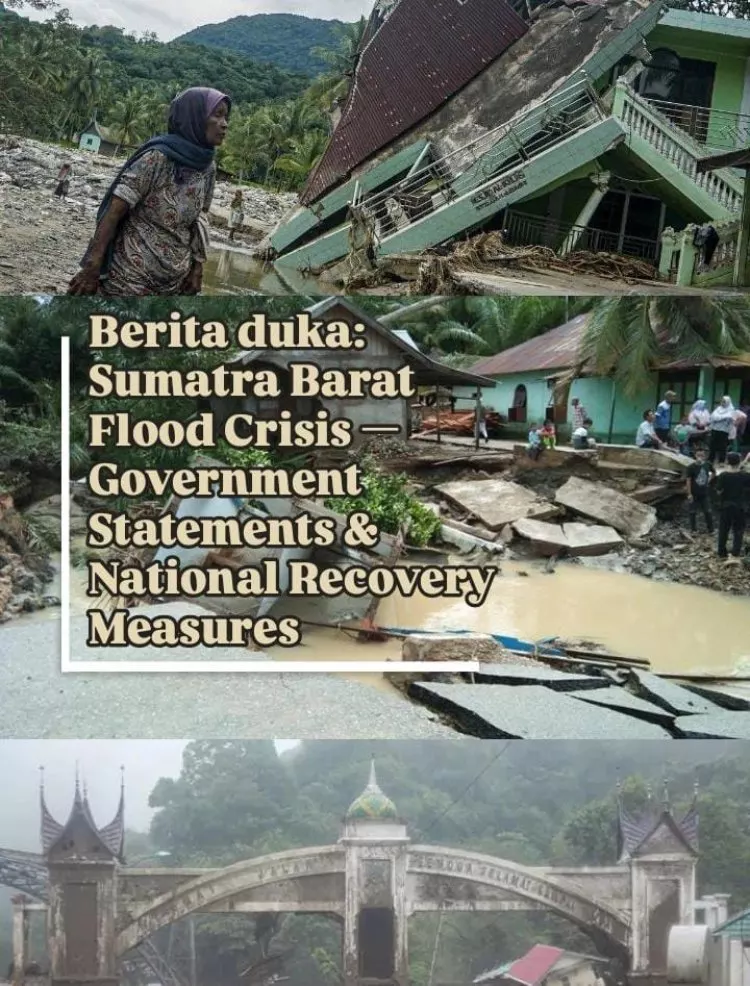
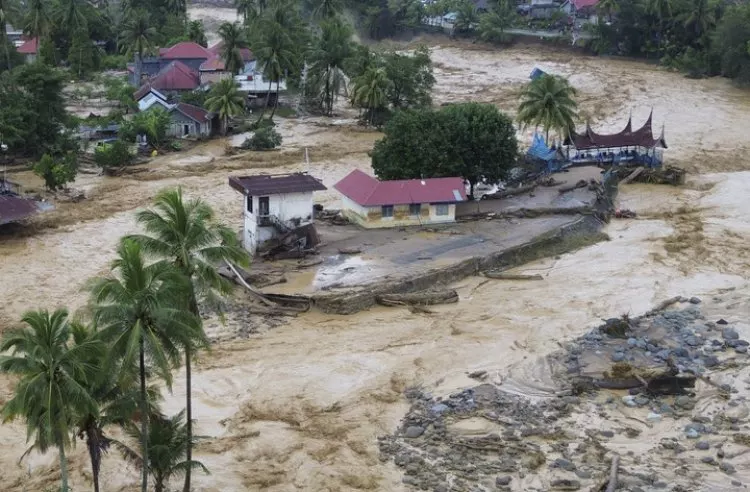
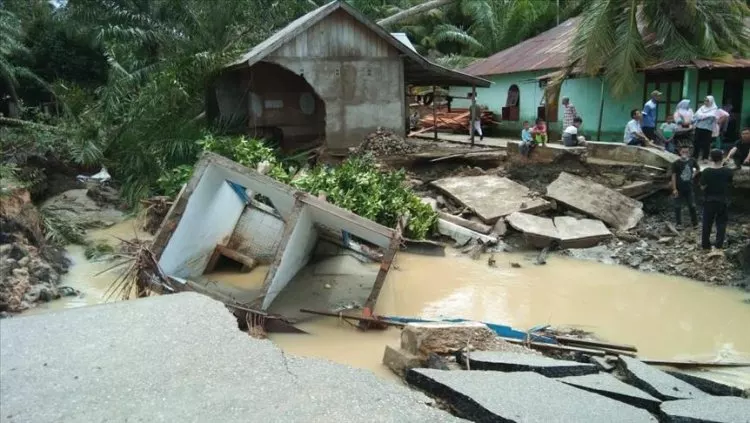
In late November 2025, several regions across West Sumatra—including Padang, Padang Pariaman, Agam, and several other districts—were hit by severe torrential rains, flash floods, and landslides. The disaster prompted authorities to declare a formal state of emergency for the province.
According to the latest data from BNPB (Indonesia's National Disaster Management Authority), the death toll reached 129, with 118 people still reported missing and 16 others injured. A few areas have slowly entered the recovery phase—for instance, in Padang Pariaman, some evacuees have returned to their homes to clear remaining flood debris and mud.
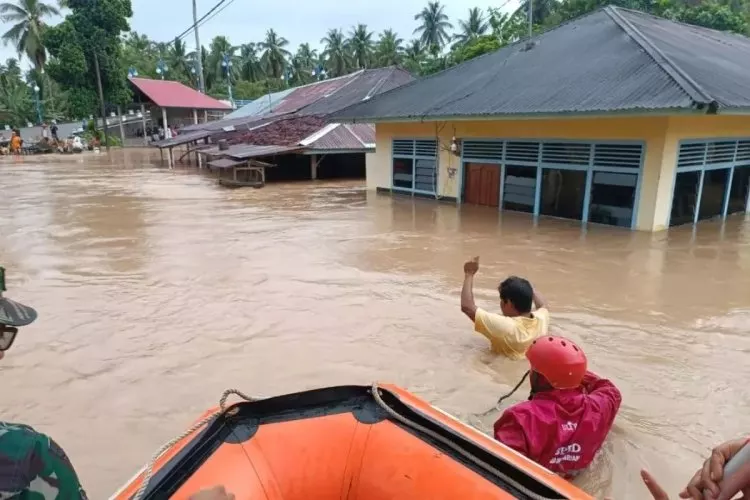
The central government responded swiftly by mobilizing multiple ministries and state agencies. Emergency personnel, including search-and-rescue teams, medical staff, social workers, and public works personnel, were immediately dispatched to the affected zones.
Key emergency measures include deploying 21,707 personnel from the Indonesian Army (TNI AD) to support critical needs on the ground—ranging from victim evacuation and logistics distribution to restoring vital transportation routes.
In addition, the government through the Ministry of Public Works deployed heavy machinery to clear drainage channels, remove sediment and debris, and repair damaged vital infrastructure, such as roads, bridges, and waterways in flood- and landslide-prone locations.
To meet urgent food and basic supply needs, the government ordered BULOG (Indonesia's State Logistics Agency) to distribute double the initial requested volume of essential staples, including rice, cooking oil, and sugar, across the affected regions.
Addressing communication and basic connectivity, the Ministry of Communication and Information Technology provided emergency satellite internet access using the SATRIA-1 satellite across roughly 10 disaster-hit points. This step ensures that vital information channels and rescue coordination remain functional despite damaged ground infrastructure.
Looking ahead to long-term recovery, the government announced plans to prepare comprehensive rehabilitation and reconstruction programs, including temporary and permanent housing for residents whose homes were severely damaged or destroyed.
Commenting on the disaster, the Minister of Forestry urged local governments and the public to improve environmental management and forest governance, emphasizing that such catastrophic events serve as a serious wake-up call regarding past environmental mismanagement.
At the legislative level, Commission IV of the House of Representatives (DPR RI) urged regional governments in West Sumatra to quickly finalize impact assessments—covering home damage, infrastructure destruction, and asset loss—so that central government aid can be targeted effectively.
The central government reaffirmed that it will not abandon the affected communities. Relief supplies have been flown in aboard multiple military aircraft as a clear signal of state commitment to regional recovery.
Although conditions have begun to improve—supported by clearer weather and weather modification operations (OMC) conducted to prevent further extreme rainfall—authorities remain on high alert and are strengthening mitigation measures to minimize the risk of similar disasters in the future.