Women in Islam: Rights, Equality, and Roles in Society
Discover how Islam upholds women's rights, gender equality, and spiritual status, addressing common misconceptions with guidance from the Qur'an and Sunnah.
 Portal Islam
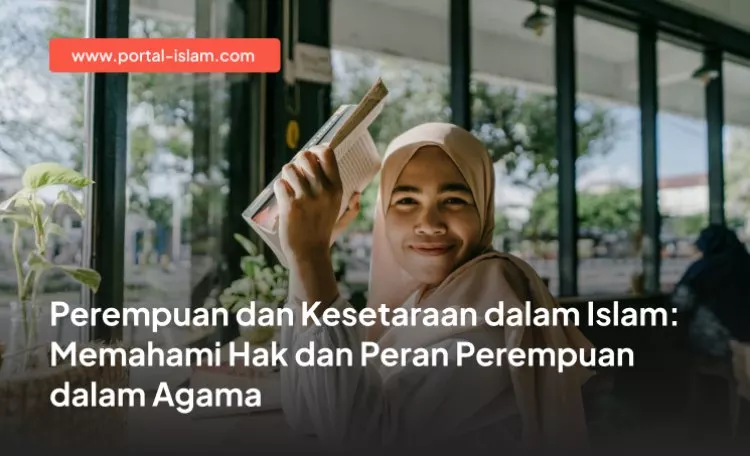



This article was first published in Indonesian. Baca versi Bahasa Indonesia →
Discussion surrounding gender equality frequently turns its focus toward Islam. As a comprehensive way of life, Islam provides clear guidance regarding the rights, status, and roles of women. This article explores how Islam views equality for women, outlines their position across various aspects of life, and clarifies common misconceptions that often arise surrounding this topic.
The Islamic Concept of Equality
Islam places men and women on an equal footing in terms of spirituality, moral accountability, and basic humanity. The Qur'an affirms that all human beings originate from a single soul:
"O mankind, fear your Lord, who created you from one soul and created from it its mate and dispersed from both of them many men and women. And fear Allah, through whom you ask one another, and the wombs. Indeed Allah is ever, over you, an Observer."
Surah An-Nisa 4:1
This fundamental equality means that women enjoy the same rights to worship Allah, seek knowledge, and participate actively in society. Islam acknowledges the essential contributions of women in all areas of life, whether as mothers, wives, professionals, or community leaders.
Women's Roles in the Family and Society
Islam accords women an exceptionally elevated status within both the family unit and the broader community. As mothers, women play a crucial role in nurturing future generations, providing spiritual guidance, and instilling moral values in their children. This responsibility is regarded as one of the most noble duties in Islamic teachings.
The Prophet Muhammad ﷺ said:
"Paradise lies beneath the feet of mothers."
Narrated by al-Nasa'i
Beyond the domestic sphere, Muslim women are fully permitted and encouraged to engage in economic, social, and civic affairs. Khadijah (may Allah be pleased with her), the first wife of the Prophet, was a highly successful businesswoman. Her legacy demonstrates that women in Islam are encouraged to take an active role in commerce and public life.
Rights Protected in Islam
Islam established explicit and detailed rights for women, encompassing education, property ownership, personal security, and legal justice. For instance, a woman retains full autonomy over her financial assets and property, independent of her husband or male relatives:
"For men is a share of what the parents and close relatives leave, and for women is a share of what the parents and close relatives leave, be it little or much—an obligatory share."
Surah An-Nisa 4:7
The right to education is also strongly emphasized. The Prophet said:
"Seeking knowledge is an obligation upon every Muslim."
Narrated by Ibn Majah
In Islamic scholarship, seeking knowledge—both religious and secular—is viewed as a vital means to strengthen faith and enhance a person's capability to serve society.
Addressing Misconceptions About Gender Equality in Islam
Many misconceptions regarding the position of women in Islam stem from cultural practices or flawed interpretations of Islamic scripture. In certain societies, traditional customs restrict women's rights and interpret religious texts narrowly, leading to the false impression that Islam oppresses women.
However, it is vital to distinguish between cultural practices and authentic Islamic teachings. Islam teaches divine justice and balance, dictating that every individual, man or woman, must be treated with fairness according to their rights and responsibilities:
"Indeed, Allah orders justice and good conduct and giving to relatives and forbids immorality and bad conduct and oppression. He admonishes you that perhaps you will be reminded."
Surah An-Nahl 16:90
Modern Challenges Facing Muslim Women
In today's interconnected world, Muslim women face distinct challenges as they strive for equality and fulfillment. They may encounter workplace discrimination, negative stereotypes, or societal pressures that conflict with their Islamic values. Navigating these obstacles requires a balanced approach in which Muslim women maintain their religious identity while engaging constructively with modern society.
Awareness of their divinely granted rights, combined with support from a strong Muslim community, is essential for women to overcome these challenges. Muslim women should be empowered to pursue their career ambitions and educational goals without compromising their faith.
Fostering Change Through Knowledge and Education
One of the most effective ways to strengthen women's rights and equality in Muslim societies is through authentic Islamic education. When women gain a deep understanding of their rights and duties, they become empowered agents of positive change within their communities.
Education encompasses both sacred knowledge and practical skills necessary to thrive in contemporary society. Educated Muslim women make profound contributions across numerous fields, benefiting both their families and global society.
Conclusion
Islam unequivocally upholds the honor, dignity, and spiritual equality of men and women. While cultural barriers and misconceptions persist, it is imperative for Muslim women to understand their honored status in Islam and work toward realizing true equality in daily life. Supported by knowledge, education, and community, Muslim women continue to play a vital role in building a just and sustainable world.