Islamic Ethics for Social Media: Rules from Qur'an & Sunnah
Discover how Islamic teachings guide our social media use, offering timeless principles of ethics, truthfulness, and privacy from the Qur'an and Sunnah.
 Portal Islam



This article was first published in Indonesian. Baca versi Bahasa Indonesia →
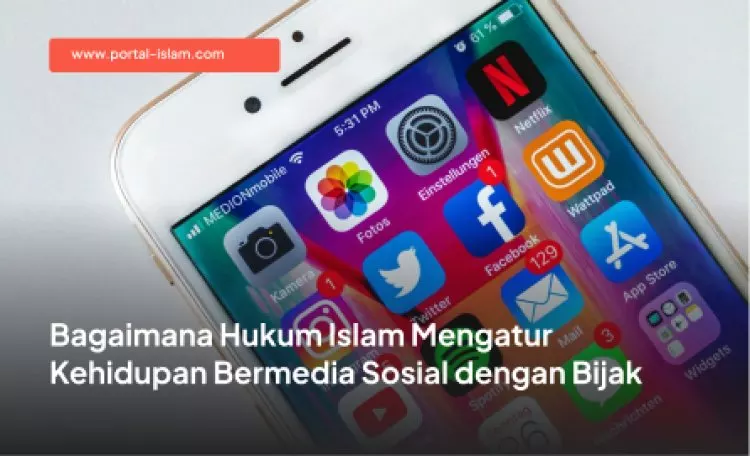
In today's digital era, social media has become an inseparable part of daily life. However, its usage requires moral guidance so that online activity does not stray from Islamic principles. Islamic law offers timeless guidance that can be applied to navigate social media wisely, ensuring that our online presence brings blessings and spreads benefit.
Social Media from an Islamic Perspective
Islam teaches believers to utilize every resource with wisdom and accountability. Social media can serve as a powerful tool for spreading goodness, engaging in dawah (inviting to Islam), and maintaining family ties. However, without proper spiritual boundaries, it can quickly become a source of rumors, sin, and division.
Allah emphasizes accountability in the Qur'an:
"And do not pursue that of which you have no knowledge. Indeed, the hearing, the sight, and the heart—about all those one will be questioned."
Surah al-Isra 17:36
This verse serves as a crucial reminder to exercise restraint and verification before posting or sharing information online.
Core Islamic Principles for Using Social Media
1. Guarding Speech and Writing
Every word we type or publish on social media will be accounted for before Allah. Muslims should strictly avoid hate speech, deceptive claims, and slander. The Prophet Muhammad ﷺ said:
"Whoever believes in Allah and the Last Day should speak good or remain silent."
Agreed upon (Narrated by al-Bukhari and Muslim)
2. Avoiding Backbiting (Ghibah) and Defamation
Islam strictly forbids *ghibah* (talking ill of others in their absence) and slander. These harmful acts often take place subtly in comment sections or shared posts.
Allah says:
"And do not backbite one another. Would one of you like to eat the flesh of his dead brother? You would detest it."
Surah al-Hujurat 49:12
3. Verifying News Before Sharing (Tabayyun)
Spreading unverified reports or false information is a serious sin in Islam. Before sharing any news, Muslims are obligated to verify its authenticity through *tabayyun* (careful investigation).
"O you who have believed, if an unrighteous person brings you news, verify it, lest you harm a people out of ignorance and become, over what you have done, regretful."
Surah al-Hujurat 49:6
4. Protecting Privacy and Dignity
Social media often encourages people to broadcast every detail of their personal lives. Islam teaches modesty, privacy, and avoiding vanity or showfulness (*riya'*). The Prophet ﷺ said:
"Part of the perfection of a person's Islam is leaving that which does not concern him."
Narrated by at-Tirmidhi
5. Engaging in Dawah with Wisdom
Social media provides an unparalleled avenue for sharing the message of Islam. However, dawah must always be conducted with respect, gentleness, and wisdom, rather than through hostility or mockery.
"Invite to the way of your Lord with wisdom and good instruction, and argue with them in a way that is best."
Surah an-Nahl 16:125
Practical Tips for Responsible Social Media Use
- Share Beneficial Content: Focus on posting uplifting material, such as authentic religious knowledge, encouraging words, or helpful advice.
- Steer Clear of Idle Arguments: Refrain from engaging in toxic online debates that yield no real benefit and only foster hostility.
- Maintain High Etiquette (Adab): Express thoughts and opinions politely, treating digital interactions with the same respect as real-world encounters.
- Manage Screen Time: Ensure that scrolling through social media does not distract from daily prayers (*salah*), family duties, and work obligations.
- Curate Your Feed: Unfollow or block accounts that promote hatred, vulgarity, or harmful ideas.
The Blessings of Islamic Digital Etiquette
- Earning Continuous Reward: Utilizing social media to share authentic Islamic knowledge can act as a ongoing charity (*sadaqah jariyah*).
- Strengthening Ties: Digital tools allow Muslims worldwide to keep in touch with distant relatives and build supportive brotherhood and sisterhood.
- Facilitating Lifelong Learning: Access to reputable Islamic channels helps believers continuously deepen their faith and understanding.
Conclusion
Using social media is a trust (*amanah*) that every Muslim must handle responsibly. By aligning our online habits with Islamic ethics, we can turn our digital presence into a means of seeking Allah's pleasure. As the Prophet ﷺ reminded us:
"Whoever guides someone to goodness will have a reward like that of the one who does it."
Narrated by Muslim
Let us use social media mindfully to draw closer to Allah and serve as a force for good in the global Muslim community and beyond.